
The Eagle Tree

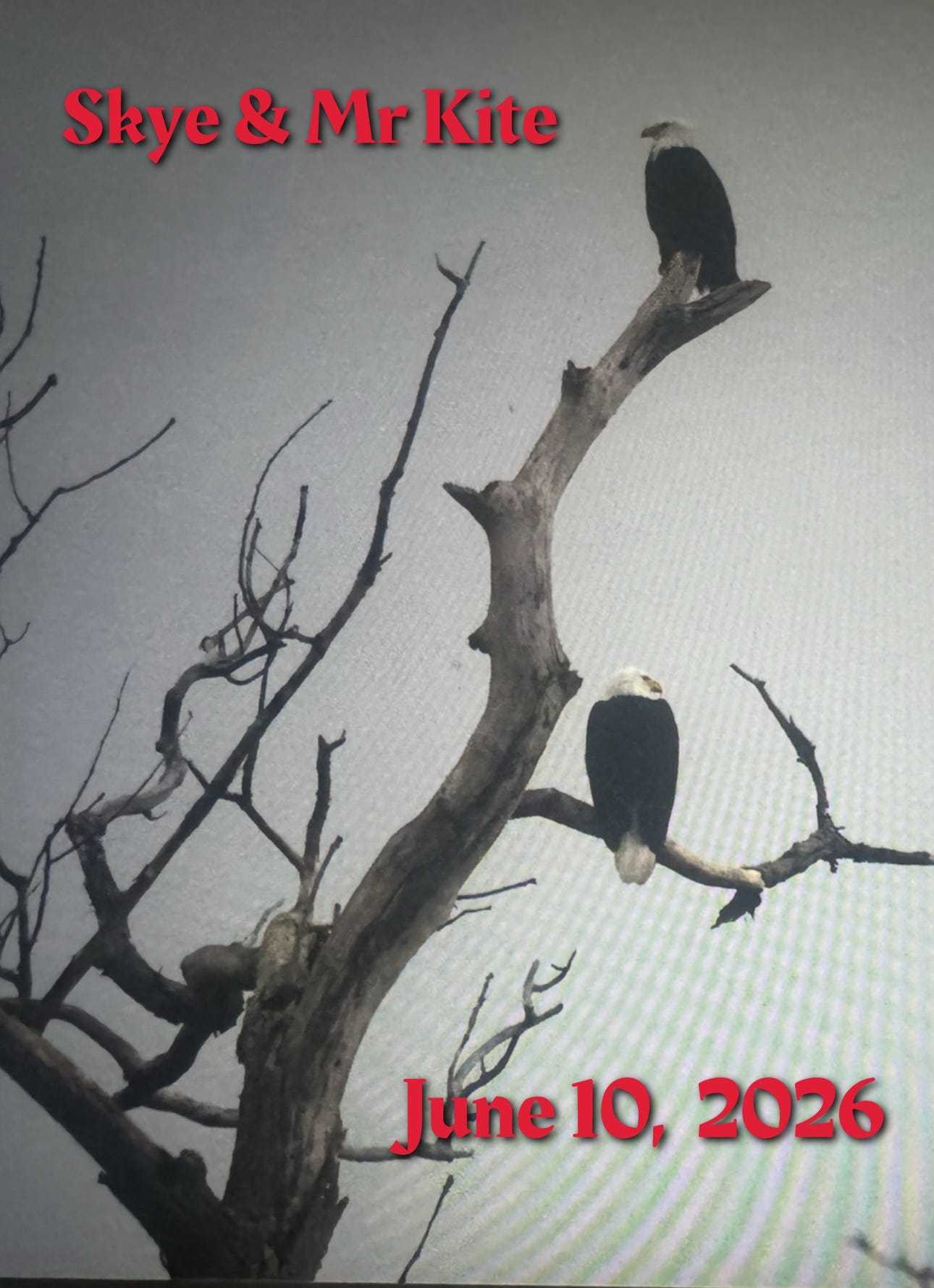
I welcome everyone to my new Substack Blog, The Eagle Whispers. My unique experience with eagles has opened my eyes to what eagles deal with when living among us. I grew up spending my summers in Point Roberts, WA one of the greatest eagle habitats in America, yet there were no eagles. The story of this cottonwood tree seemed like as good a place as any to start telling my story. (The picture, taken on June 10th 2026 put on top of blog), shows an adult pair of eagles perched in the tree just a few days before it came crashing down a steep 60 foot slope. Thus ending the eagle pair’s and my 30 year relationship with this tree.
It was 1996, and I was back in Point Roberts, staying at the family beach house. A few friends were visiting from Portland, OR and we decided to take a walk along the shoreline. After about a half mile the beachfront houses give way to dense forest that sits atop a 60 foot bluff. Suddenly we were face to face with 2 juvenile eagles perched in a tree. We couldn’t believe how large they were. This was the second time I’d ever seen an eagle, and the first time was in 1978 when an eagle flew over my head, and after a few minutes was gone. I was 23 at the time.
Now 41, I was starting to get curious about eagles and questions started coming to mind, yet I didn’t know where to find answers, or who to even talk to about it. We walked on for another mile or so and when we came back to the spot we saw the two eagles, they were gone. So we started looking up in the trees when I spotted the first nest. We both laughed at the ridiculous scale of the nest. It was 3 feet across and another couple of feet deep. Then we looked further to the west and saw the second nest. It looked a little bigger then the first nest. The nests were in cottonwood trees and the nests were easy to see for it was early spring and the leaves of the trees were just starting to grow back. We never saw the adults during this trip. I went back to my life in Portland and forgot about the eagles.
I now lived in San Diego, CA and was working as a construction superintendent building large multi family housing projects. These projects consumed all my time, and it was 2007 before I got back to wanting to find answers about the eagle nests I’d seen. I arrived in August and went walking to where I’d seen the eagles in the past, and the 2 eagle nests. But when I got back to the beach house I hadn’t seen any eagles, and I had failed to find the nests? I was even more confused. I must have just missed seeing the nests, I thought.
In in late 2007 I met Frank Isaacs, who ran the Bald Eagle Monitoring Program in Oregon from 1978 to 2007.
Frank told me about the Bald and Golden Eagle Protection Act, which was first written in 1940, and updated and expanded into Federal Guidelines for protecting eagles and their habitat.
It was men like Frank who armed with these guidelines enabled the Bald Eagles to come back from near extinction. The State of Washington also had their wildlife agency, the Washington Department of Fish and Wildlife (WDFW) and of course the Federal wildlife agency (USFWS) backed up the work of the State Agencies. But Frank Isaacs also taught me the protocol for observing eagles. This would open up a whole other level of my understanding of eagles.
So I found out that the eagle’s nests, tree’s etc are protected, and alternate nests are also protected. This is what Mr. Isaacs taught me, and following is right off the USFWS webpage; here is the explanation of the active nest, and the alternative nest protection from USFWS.
“Under the Bald and Golden Eagle Protection Act (BGEPA), both active nests and alternate nest trees are federally protected year-round in the United States.
The legal framework and protections specifically address alternate nest trees:
Definition: An alternate nest is defined as one of potentially several nests within a nesting territory that is not currently “in-use” (meaning it lacks eggs or dependent young). When a territory is occupied but no eggs are laid, all nests in that territory are considered alternate nests.
Year-Round Protection: Nests are protected at all times, regardless of whether eagles are currently present. It is illegal to destroy, relocate, or obstruct eagle nests without a permit from the U.S. Fish and Wildlife Service (USFWS).
Disturbance Buffers: The National Bald Eagle Management Guidelines recommend a buffer zone of up to 660 feet around both active and alternate nests to prevent human activities from interfering with breeding and sheltering.
Washington State Context: Although the bald eagle was removed from the Washington state and federal endangered species lists, federal protection remains stringent. Permits issued through the USFWS Eagle Management Program are required if any human project threatens to disturb or take (destroy/remove) an eagle nest. “
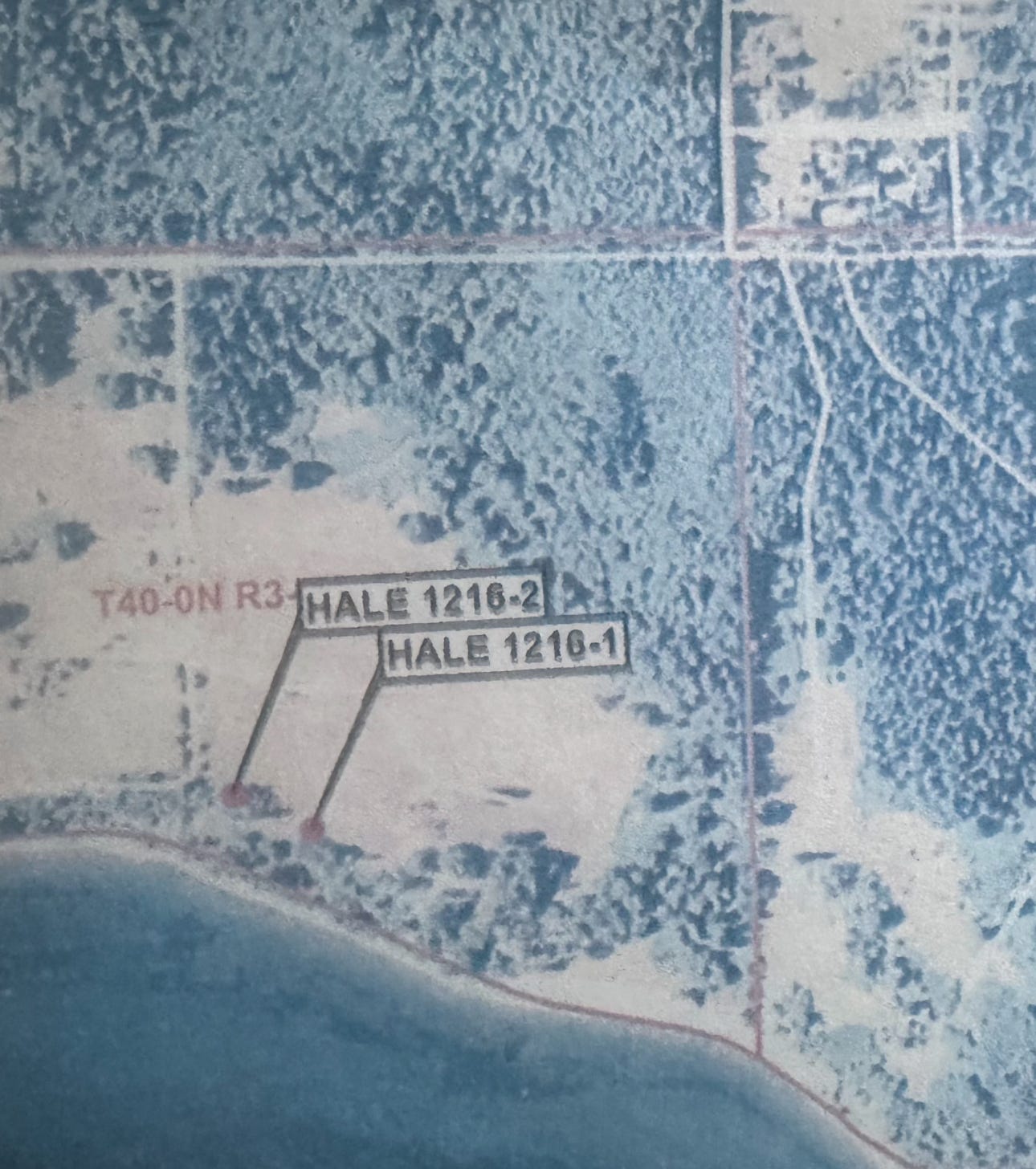
Here is a picture of the WDFW record of this eagle territory which coincidentally started in 1996, the same year I’d first seen the nests tree identified by WDFW as 1261-1 and 1216-2 (pictured below). The tree we are talking about is 1261-1.
So the next year in 2008 I came back to Point Roberts to verify the status of the eagle nests that I failed to find the previous year. I also had acquired a spotting scope and started observing the eagles of Seabright Farm by following official protocols.
So the challenge of this blog is to bring forward a lot of facts and research that has been done with eagles over the last 50 years. Also I will be presenting a lot of field research done on eagles, and eventually this blog will be part of a book I plan on publishing when I get through most of the material on eagles. I want to present a basic view of eagles, so everyone will better understand the more advanced and significant lessons on eagles.
I always get a lot of questions about eagles, and so we are putting a FAQ page on EagleSkyenet.com — The more one learns about eagles, the more questions come to mind, and sometimes the eagles give you the answer, but it comes along with more questions.
I have 20 years of video’s and pictures I’ve taken as part of my extensive study. The documentary series will go much deeper into various topics then this blog will. This blog is intended to give one a general education on eagles, as where the book and video series goes beyond the research and focus’s on how eagles are actually treated, and my personal experiences in dealing with wildlife authorities. This blog format will be more like a power point presentation and will jump around a lot with a loose narrative structure.
Substack was chosen as it allows for people to get this content for free, but it also allows for people to pay a monthly fee if they’d like help support the work we do at Eagle Skyenet.